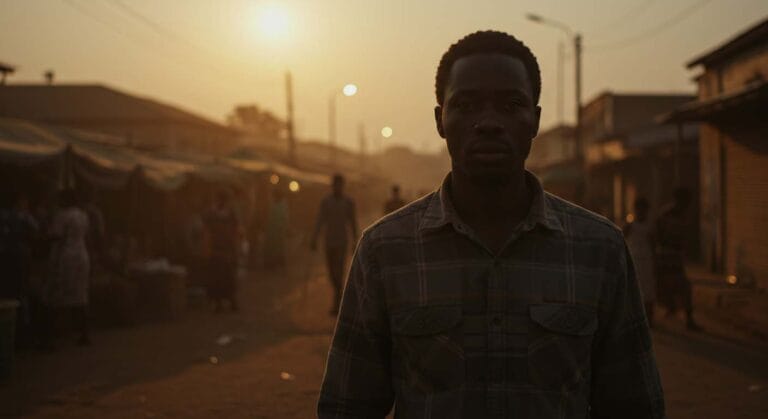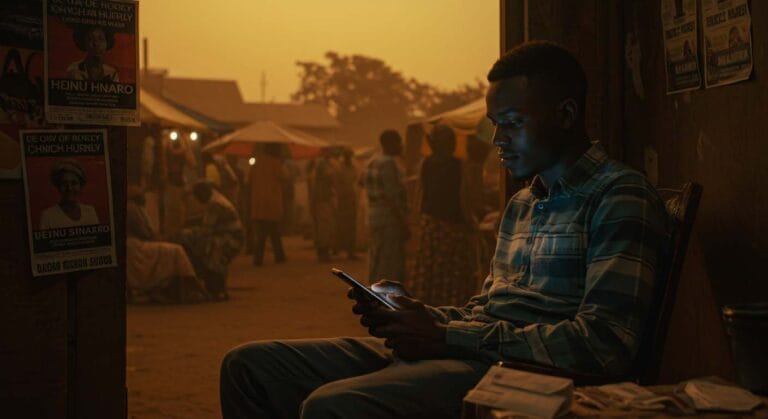


Mornings in Gweru always felt colder when you woke up alone. The kind of cold that made the blankets feel like the only safe place in the world. Reo lay still, staring at the damp patches on the ceiling of his one-room, the covers pulled tightly around him. The air smelled faintly of last night’s meal and the dust that always crept in through the cracks in the window frame. On the small table near the bed, the flyer from the crusade still lay there, curling at the edges. He had read it twice before sleeping. He had even prayed over it, something he had not done in years.
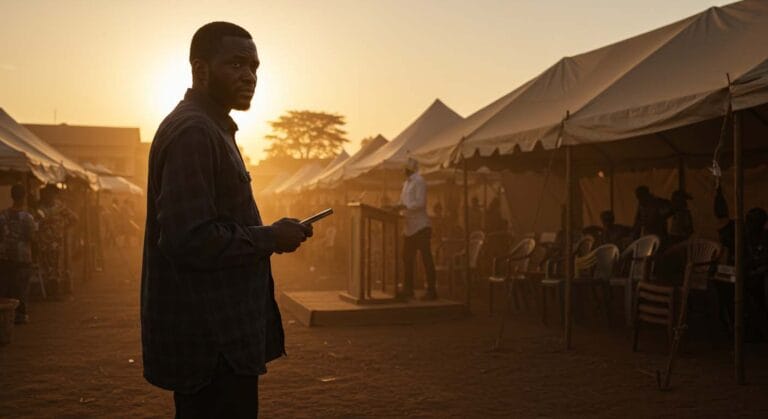
It had been a week since that night under the tent. The noise, the music, the prayers and the touch of Prophet Love still lingered in his mind. Reo found himself restless, caught between two worlds that seemed to pull him in opposite directions.
He had always belonged to the mainline church, the one with brick walls and polished wooden pews, where everyone knew your family name. They had rules, real ones, written and unwritten, rules you did not break if you wanted to belong. He had grown up in the youth department, worked his way up to lead the media team and was now well known for his strong voice and energy during every youth Sunday. The pastor trusted him. The elders called him “my boy.” Even the old women in the choir claimed him as their own, saying, “This one, he is like my son.”
But after the crusade, something in him shifted. Prophet Love’s church was nothing like the one he had known all his life. It was loud and vibrant, full of singing, clapping and dancing. Nothing felt stiff or predictable. Roles were not given because of age or family history, but because of what you could actually do. On the very first night, Prophet Love had noticed him, asked his name, and without hesitation put him in charge of media for the crusade. He gave him the responsibility to run the WhatsApp groups and trusted him with making announcements. It was the first time Reo had felt truly needed, not just tolerated.
Now, every Sunday had become a battle. He would wake up early, iron his shirt, and then stand in front of the cracked mirror, unsure which church to go to. Some mornings, habit won. He would go to the mainline church, sit quietly, sing when it was time, then feel his eyelids grow heavy during the sermon. Other mornings, he would find himself drawn toward the big tent, where the music seemed to reach for him even from a distance. There, everything felt alive. His voice joined the singing with joy, his body moved with the rhythm of the drums, and he felt seen.
Yet the guilt stayed with him. He knew what people would say if they found out. His family expected him to settle down one day, marry a respectful girl from the same church and eventually become a deacon. The old pastor would often tell him, “Stay with what you know, Reo. New things are dangerous.” Even his mother, calling from Mkoba, would end every conversation with the same words. “Usasiye chechi yedu, mwana wangu. Stay with your church.”
It was not only him who was changing. Shawty was also on her own journey. At university, she lived in a crowded hostel room with other girls from different backgrounds. She had always gone to church out of duty. Her parents expected it. She would sit somewhere in the middle row, listen quietly, sometimes drift off in thought, and leave quickly after the final prayer. She rarely socialised at church and preferred life outside the church walls.
But since meeting Prophet Love, something in her had shifted. She found herself reading her Bible more often and even caught herself humming worship songs as she cooked or studied. She even joined the youth group’s WhatsApp chat, something she had never done before. Prophet Love had a way of making her feel part of something larger than herself, like she belonged in a way she had never felt in her old church.
Reo noticed this change in her, and it made him both happy and uneasy. They now found themselves drawn to the tent services, sometimes sitting side by side, sometimes ending up in different parts of the crowd, but always feeling at home.
Prophet Love seemed to have a gift for spotting talent in people. He would pick out the quietest girl sitting in the back row and make her an usher. He would notice the loudest boy and put him in charge of the choir. One day he had told Reo, “Your gift is for the people, my son. Don’t waste it. God has plans.”
Even the way the church was organised was different. If you enjoyed decorating, you were in DECO. If you could type or handle a camera, you were on media and If you liked welcoming people, you were an usher. The tent was alive with activity, and everyone had a place where they could serve. Reo found himself changing too. For the first time, he felt like he was part of something that wanted him, something that valued what he could bring.
Yet every evening, as the sun dipped low and the shadows of Gweru’s faded rooftops stretched long across the streets, the old questions came back. Was he betraying his roots or was he wrong to leave the church that had raised him for the excitement of a man who barely knew his family name? Was this really God’s calling, or just the thrill of something new?
He wanted to talk to Shawty about it, but whenever they met the conversation never went that far. The words were always swallowed by their laughter, or drowned out by the music and noise of another service.
That morning, as the cold seeped through the cracks and the thin light of the early sun slid across the room, Reo sat up. He reached for the flyer on the table, his fingers tracing the edges. Reo even read the words again, the bold print almost speaking to him. He thought about the tent, the music, the energy, and then about the quiet pews of the church he had known all his life. His chest tightened.
He closed his eyes and prayed, not with long rehearsed lines, but in a few honest words. He prayed for a sign. Reo prayed for God to show him where he belonged.
Somewhere in the distance, beyond the walls of his small room, a rooster crowed. The day was beginning, and with it came the same choice that had haunted him all week.